
MARCH 9-12, 2026

Venetian Convention & Expo Center | Las Vegas, NV

JOIN HL7 AT HIMSS / network - discover - learn

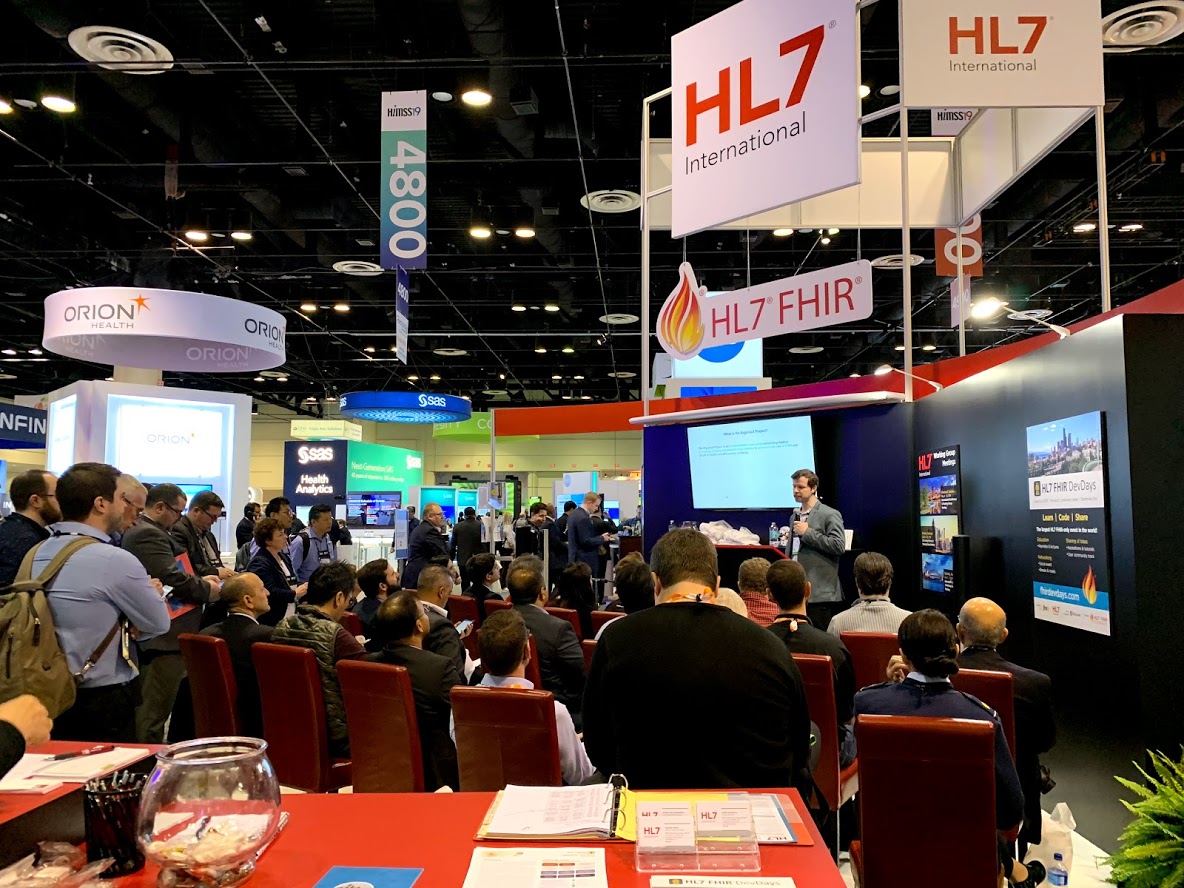
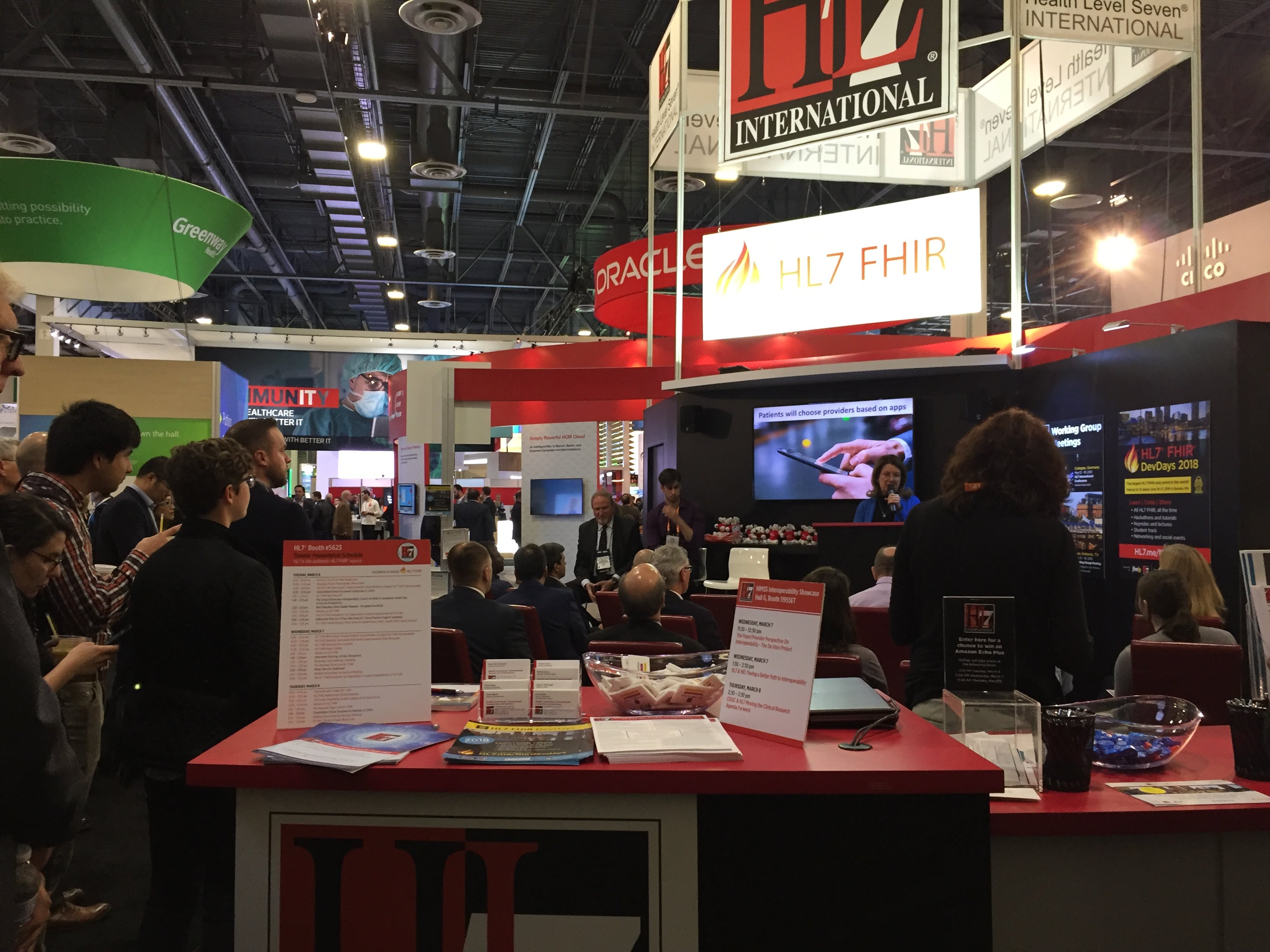
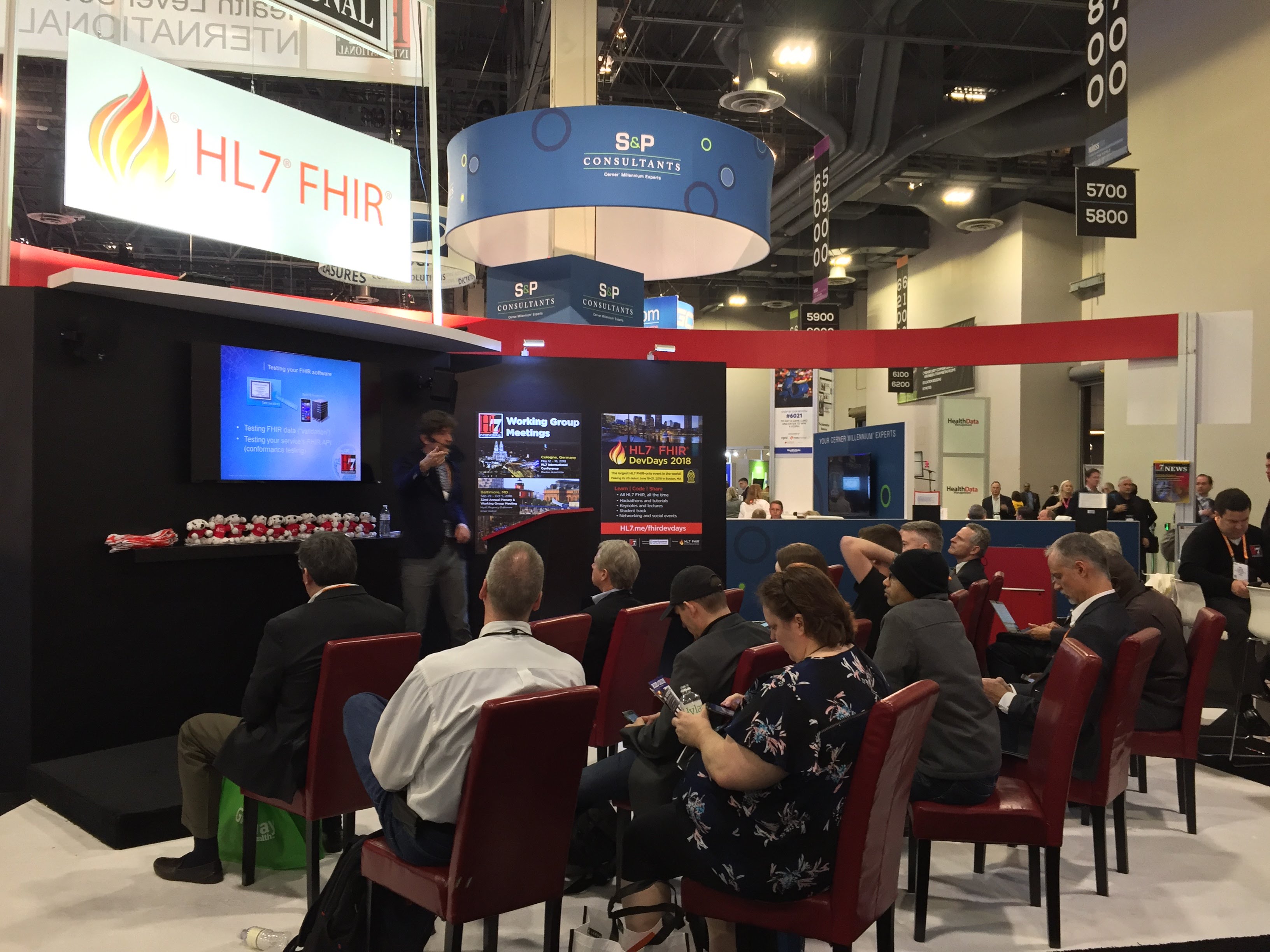
We're excited to collaborate once more with HIMSS for their Global Health Conference & Exhibition! Come find us in the Interop+Smart Experience Pavilion - Booth 12517 where we're hosting three full days of informative sessions led by some of the industry's best subject matter experts.

Being a Member Has Its Advantages

HL7 Members receive a discount off their conference registration! 

  • Visit the HIMSS26 general registration page and sign in.  
  • Once you're signed in, start your registration and use promo code HL726 to save $250 off your registration!

SESSION SCHEDULE / mark your calendar

FHIR-Flame_only_SQ

Kill the Clipboard: Leveraging Digital Insurance Cards

We are moving from a world of static, physical insurance cards to dynamic, digital cards that are portable, verifiable, and useful to payers, providers, and consumers at every touchpoint. Built on HL7 FHIR and SMART Health Cards and Links standards, digital insurance cards can surface coverage and cost information in real time, trigger patient-initiated requests, and streamline check-in, referrals, and prior authorization. Attendees leave with an understanding for how to create digital insurance cards that reduce front desk friction, eliminate rework, and improve patient experience.

Speaker:

  • Mark Roberts
    Lead, CARIN IG for Digital Insurance Card, Co-Lead for CARIN IG for Blue Button - CARIN Alliance; Director - Leavitt Partners
FHIR-Flame_only_SQ

AI for Da Vinci Burden Reduction: Do's and Don'ts

This session will outline practical "do's and don'ts" for using AI alongside the Da Vinci Burden Reduction implementation guides (CRD, DTR, PAS). We'll explore appropriate use cases (such as summarizing clinical data or converting unstructured documents into structured FHIR artifacts) while keeping FHIR-based CRD/DTR/PAS workflows and payer rules as the authoritative source of truth. Attendees will learn key guardrails around transparency, avoiding AI-generated coverage decisions, and preventing hallucinated clinical content from entering prior authorization transactions. The talk will emphasize governance, testing and design patterns that let organizations safely benefit from AI within HL7 standards.

Speaker:

  • Maxim Gorshkov 
    Senior Software Developer - InterSystems Corporation

FHIR-Flame_only_SQ

Novel Use of Artificial Intelligence in Clinical Research at MSKCC to Amplify Data Management Capabilities using HL7 FHIR

We will present MSK’s™s Clinical Trials Data Hub (CTDataHub, a web-based application that was developed to reduce the time and effort required for data managers (DM) to abstract data from MSK clinical systems to biopharmaceutical firm’s Electronic Data Capture (EDC). It extracts and consolidates Lab Results, Vitals, Medications, and Adverse Events from the MSK electronic health record (EHR) and displays it in a user friendly and consolidated view for easy entry into EDC forms. CTDataHub has integrated generative Artificial Intelligence (AI) via a Large Language Model (LLM) based on gpt-oss:120b, an open-source model released by OpenAI, to extract patient data from unstructured Electronic Health Record documents.

Speaker:

  • Michael Buckley
    Associate Director, Product Management - Memorial Sloan Kettering Cancer Center

FHIR-Flame_only_SQ

Securing Payer Interoperability at Scale: FAST Security + Da Vinci in Action Across CMS-Aligned Networks

As CMS accelerates the Health Technology Ecosystem and CMS-Aligned Networks initiative, payers and providers must move from isolated APIs to secure, network-to-network interoperability at scale. This session demonstrates how HL7® FHIR® at Scale Taskforce (FAST) Security STU 2, in collaboration with the HL7 Da Vinci Project, provides the standardized trust framework required to operationalize payer interoperability across CMS-0057, prior authorization, payer-to-payer exchange, and TEFCA-facilitated FHIR.

Led by FAST Technical Director, David Pyke, the session will explain how certificate-based digital identity, dynamic client registration, OAuth-based authorization, and automated trust onboarding create repeatable, scalable API security patterns across networks. Mark Scrimshire will bring implementation perspective from OnyxHealth, illustrating how these standards are applied in real-world payer environments to support prior authorization workflows, directory-driven API discovery, payer-to-payer exchange, and production FHIR deployments aligned with Da Vinci implementation guides.

Speakers:

  • David Pyke
    Technical Director - HL7 FAST FHIR Accelerator

  • Mark Scrimshire
    Co-Chair - HL7 Da Vinci Project Payer Data Exchange Work Group; Chief Interoperability and Innovation Officer - Onyx Health
FHIR-Flame_only_SQ

From Inception to Operation: The HL7 Caliper Story

January 2025 saw the Call for Participation and the Inception phase for the new HL7 devices accelerator program. Now it is fully operational and has a multi-year roadmap that will significantly impact this global ecosystem, from patients to healthcare providers to technology developers.

Speaker:

  • Todd Cooper
    Technical Director - HL7 Caliper FHIR Accelerator; HL& Devices Evalgenlist, Co-Chair - HL7 Devices Work Group

FHIR-Flame_only_SQ

Speaking the Same Language: Data Standards that Power Rural Health Innovation

The Gravity Project has created shared data and coding standards for screenings, community-based referrals, and reimbursement for wraparound services to support health outcomes. By aligning early on with these established frameworks, providers, payers, community organizations, and government agencies can accelerate interoperability and speak a common technical and clinical language.

Speaker:

  • Emily Anders
    Committee Member - Gravity Project; Director of Payments Strategy - Unite Us

FHIR-Flame_only_SQ

Lessons Learned From Implementing the CGM FHIR IG – From the HL7 Argonaut Accelerator Project to Actual EHR System Integrations

The HL7 International accelerator projects, such as Argonaut, drive data interoperability standards development, but this is just the beginning of a journey into real-world applications. Dexcom will share how it navigated that journey from participating in Argonaut to implementing a Continuous Glucose Monitoring (CGM) FHIR Implementation Guide (IG) at major health systems in the U.S. The presentation will cover lessons learned and best-practice recommendations for implementing a FHIR IG.

Speaker:

  • Beata Piehl - MSCS,  PMP, LSSMBB, CSM 
    Member - HL7 Argonaut Project; Director Global Interoperability Solutions - Dexcom

FHIR-Flame_only_SQ

HL7 FHIR as the Engine for National Interoperability: The Italian NHS Case Study

The Italian National Health Service (SSN) serves a diverse population across 20 autonomous regions, which has historically led to fragmented, regionally siloed patient data. This session details Italy's ambitious national strategy to transition to a truly unified digital health ecosystem through the development and nationwide roll-out of the Fascicolo Sanitario Elettronico (FSE) as the core interoperability hub. We will demonstrate how Italy is leveraging the HL7 FHIR standard to unify and standardize not only the FSE but also critical national services, including:

  • The National Telemedicine Platform, ensuring standardized service delivery and data exchange for remote patient care.
  • We will explore the complex technical and political roadmap required to mandate the use of FHIR-based APIs across these diverse regional and national components.

Speaker:

  • Marco Pingitore
    Psychologist - ASP Crotone (Public Healthcare); Member - HL7 Italy

FHIR-Flame_only_SQ

Gravity Project Implementation

In partnership with the Gravity Project, Civitas Networks for Health and the New York eHealth Collaborative (NYeC) are working toward New York state-wide implementation of Gravity terminology and technical standards for the purposes of the New York Health Equity Reform 1115 Waiver Amendment. Throughout 2024 and 2025, NYeC, Gravity, and Civitas have worked together to implement Gravity Project standards, apply best practices to SHIN-NY 1115 testing and development, and provide feedback into Gravity standards for continuous improvement, supporting national learning. Feedback from the NYeC implementation work has been incorporated into Gravity’s SDOH CC FHIR IG STU 3.0, which is being published in early 2026. The goal of the NYeC FHIR IG based on Gravity data standards is to ensure consistent, high-quality data is exchanged from organizations supporting the waiver to QEs and ultimately through the SHIN-NY Data Lake to NY State Medicaid.

Speakers:

  • Jess Little
    Steering Committee Member - HL7 Gravity Project FHIR Accelerator; Chief Operating and Programs Officer - Civitas Networks for Health

  • Demri Henterson - MHA, PMP 
    Implementation Workstream Project Manager, Grans and Programs Manager - Civitas Networks for Health
FHIR-Flame_only_SQ

How to Find and Read FHIR Implementation Guides

Check back for the session overview!

Speaker:

  • Linda Michelson
    Implementer Member, Technical Steering Committee  - HL7 International; Co-Chair - HL7 CDA Management Group; Member, HL7 US Realm Steering Committee; Member, Operating Committee - HL7 Da Vinci Project; Member, Steering Committee - HL7 Argonaut Project; 2025 Recipient - HL7 Volunteer of the Year Award; Award Recipient - Da Vinci Project Community Champions

FHIR-Flame_only_SQ

From SNOMED CT to CPT: Translating Clinical Meaning into Scalable Payment and Operations

Presentation Description: As healthcare increasingly relies on structured clinical data, the lack of a standardized pathway from clinical terminologies to administrative codes remains a major barrier to automation, interoperability, and value-based care. This session will introduce the AMA’s SNOMED CT-to-CPT mapping initiative and explain how it enables computable translation of clinician-documented concepts into billable services. Attendees will learn how this mapping can support FHIR-based workflows, reduce administrative burden, improve coding accuracy, and unlock downstream use cases such as prior authorization, quality measurement, and AI-enabled clinical documentation. The presentation will also highlight governance, use-case prioritization, and how HL7 stakeholders can engage with and operationalize the mapping.

Speakers:

  • Julie Brown Georgi
    Director of Interoperability, Policy and Standards - American Medical Association; Operating Committee Member - Gravity Project HL7 FHIR Accelerator; HL7 Collaborator

  • Denis Casaubon
    Product Management Director
    - American Medical Association
FHIR-Flame_only_SQ

Introduction to Da Vinci Burden Reduction for Prior Authorization

Da Vinci Burden Reduction is the suite of FHIR Implementation Guides primarily focused on prior authorization automation and reducing the burden on providers and payers within this workflow.

Speaker:

  • Jeff Brown
    Member - HL7 FHIR Management Group; Principal Healthcare Standards Advisor - Lantana Consulting Group

FHIR-Flame_only_SQ

Scaling Computable Consent Across the Healthcare Ecosystem: Operationalizing the FAST Consent Implementation Guide

In this session, Janice Reese, FAST Program Manager, and Kevin Day, FAST Consent Co-Lead, will illuminate how the FAST Consent guide operationalizes consent management requirements into implementable FHIR operations, search parameters, value sets, Capability Statement elements, and Subscription Topics. Attendees will gain clarity on the guide’s consent lifecycle support — including solicitation, decision, delegation, revocation, disclosure audit, and status inquiry — and how these changes are exchanged across organizations and use cases.

The presentation will translate guide constructs like subscription-based notification models into actionable strategies for implementers. It will also outline other considerations and integration touchpoints with digital identity, directory services, and existing exchange frameworks to support trusted exchange while preserving patient preferences.


Participants will leave with concrete insights into how the current FAST Consent FHIR Implementation Guide can be applied to advance scalable, interoperable, and computable consent management — bridging policy intent with executable FHIR-based mechanisms.

Speakers:

  • Janice Reese 
    Program Manager - HL7 FAST FHIR Accelerator

  • Kevin Day
    Program Manager - HL7 FAST FHIR Accelerator; Co-Lead - HL7/FHIR FAST FHIR at Scale Taskforce Consent Management Implementation Guide; Principal Business Advisor - Edifices
FHIR-Flame_only_SQ

From Exchange to Impact: Making Data Usability Take Root at Scale

Data exchange is no longer the hard part – usable data is. This session spotlights The Sequoia Project’s Data Usability work and the Taking Root movement, showing how organizations can move beyond connectivity to ensure shared data is complete, reliable, and fit for clinical and operational use. We’ll highlight practical frameworks, early adoption signals, and how HL7 standards serve as the foundation for measurable improvements in data quality and trust. Attendees will leave with clear, actionable steps to assess, score, and strengthen data usability within their own HL7-based interoperability ecosystems.

Speaker:

  • Didi Davis
    Vice President, Informatics, Conformance and Interoperability - The Sequoia Project; Co-Chair, HL7 CDA Management Group - HL7 International

FHIR-Flame_only_SQ

In the Age of AI, Transparency Around Data and Actions Is Critical

Artificial Intelligence (AI) has significant potential to improve healthcare outcomes. From ambient scribes capturing data directly from patient conversations to Agentic Agents assisting in managing care, the landscape is changing rapidly. However, there are challenges along the way, such as bias, hallucinations, and non-determinism. We need effective ways to trace AI’s involvement in healthcare. The AI Transparency on FHIR Implementation Guide (IG) is a start, but we also need to talk about the importance of tracking actions taken or planned by AI. Come hear about this new IG and what is still needed. Along the way, we’ll talk about provenance, model cards, FHIR CarePlans, and Agentic Agents.

Speaker:

  • Sam Schifman
    Chief Innovation Architect - Vantiq; Co-Author, HL7 Informative Document: AI/ML Data Lifecycle, Edition 1 - US Realm

FHIR-Flame_only_SQ

Helios – Accelerating the Use of HL7 FHIR in Public Health

While public health has been an early (and successful) adopter of interoperability standards across many programs and use cases, much work remains to ensure that public health programs have access to the authorized data they need to effectively and efficiently safeguard the health of the populations under their care. The Helios FHIR Accelerator for Public Health has developed a broad coalition of public health programs, HIT vendors and other key partners to explore and test how FHIR can be applied to public health use cases. Using several different approaches, including RESTful API queries, bulk data, and aggregate measures, Helios participants are paving the way to a better-informed and more effective public health community.

Speaker:

  • Craig Newman
    Program Manager - Helios HL7 FHIR Accelerator; Senior Fellow - J Michael Consulting

FHIR-Flame_only_SQ

Designing and Operating a FHIR-First Cloud Data Platform at Scale: Practical Insights and Lessons Learned

As healthcare organizations accelerate digital transformation, adopting a FHIR-first approach has become essential for interoperability, agility, and data reuse. This session shares real-world insights from Northwestern Medicine Cloud's FHIR adoption, including designing, implementing, and operating a FHIR-first digital data platform at enterprise scale. It explores key architectural decisions, governance models, and operational practices required to support critical FHIR-compliant workloads while maintaining performance, Data Quality, and conformance at the enterprise level.

Speaker:

  • Lima Chatterjee
    Principal Technical Architect, Enterprise Data - Northwestern Medicine

FHIR-Flame_only_SQ

What CodeX Is Solving Today: A High-Level Overview of Active Use Cases & Recent Outcomes

CodeX, the HL7 FHIR Accelerator for oncology and specialty data, delivers meaningful improvements across cancer care, genomics, and cardiovascular health workflows. This presentation provides a high-level overview of CodeX’s active use cases, including mCARD, Molecular Tumor Board, Prior Authorization in Oncology, REMS, and Pathogen Genomics, and highlights recent outcomes and early pilot insights. Designed for audiences of all backgrounds, this session focuses on the real-world problems CodeX is solving today and the value emerging from current implementations. Attendees will also learn how to get involved in CodeX initiatives and contribute to advancing FHIR-based interoperability.

Speaker:

  • Sandra Sabaratnam
    Program Manager - CodeX HL7 FHIR Accelerator

FHIR-Flame_only_SQ

From Regulation to Reality: Implementing CMS Patient Access APIs for a Statewide Medicaid Program

CMS interoperability mandates are often discussed in theory, but far fewer organizations are running them at scale. In this session, Firely and the New Jersey Innovation Institute (NJII) share a real-world implementation of the CMS Patient Access and Provider Directory APIs, supporting Medicaid access across the entire state of New Jersey.

Speaker:

  • Alexander Zautke 
    Project Manager (Firely Server) - Firely; Chief Technology Officer - HL7 Germany

FHIR-Flame_only_SQ

CEO Presentation

Check back for the session overview!

Speaker:

  • Professor Rachel Dunscombe, CHCIO
    Chief Executive Officer - HL7 International

FHIR-Flame_only_SQ

QR Codes to Share HL7 FHIR Patient Summaries: How It Works and Case Studies

Collecting a patient’s medical history still heavily relies on paper-based forms, leading to re-entry of information and the risk of data omission. Recent innovations demonstrate that Quick Response (QR) codes and FHIR-based patient summaries can provide a better alternative. Using the HL7 SMART Card and Link standards and the HL7 International Patient Summary (IPS), I will review advancements made by several nations to improve care continuity. The presentation will include case studies and technical details on how these standards enable secure and effective patient-mediated information exchange.

Speaker:

  • John D'Amore
    Co-Editor - HL7 International Patient Summary Implementation Guide; President - More Informatics; Former CDA Management Group Co-Chair

FHIR-Flame_only_SQ

Washington State Reference Implementation Empowering Patients with a Portable "My Health Summary”

Washington State Department of Health (DOH) and Health Care Authority (HCA) in partnership with the University of Washington and the US Assistant Secretary for Technology Policy (ASTP) has been demonstrating the ability to use US Core Data for Interoperability (USCDI), SMART Health Cards and Links to deliver the foundational aspect of the 21st Century CURES Act, patient access API to their data through "My Health Summary". This approach provides seamless, secure and portable access to an individual’s health data (clinical and claims), made available through the APIs required by ASTP’s EHR Certification Program, and leveraging CMS Aligned Networks. The session will highlight the enabling use of SMART Health Cards and Links to facilitate unexpected and out-of-area care and highlight how these technologies also provide a single platform for a patient to retrieve, store, and share their health and insurance information. Sharing these data may help those traveling, parents or caregivers, and anyone who wants to view their own records or securely share their data with healthcare providers or others of their choosing. This reference implementation for data sharing has been adopted and adapted by Canada and is in production use in several provinces.

Speaker:

  • Bryant Karras, MD, FACMI 
    Chief Medical Informatics Officer - Washington State Department of Health

FHIR-Flame_only_SQ

Operationalizing Gravity Standards and FHIR for Social Care at Scale

This presentation details how Findhelp is operationalizing New York’s Section 1115 Waiver demonstration by mapping social care workflows to Gravity Project standards and leveraging FHIR bundles for three Social Care Networks. Implementation included standardized screenings, needs identification, social care referrals, and interventions leveraging code sets such as LOINC, ICD-10, and SNOMED CT within FHIR bundles. This has enabled a precise and interoperable digital record of care. Additionally, we will discuss how we successfully transmit this standardized data from community providers via Regional Qualified Entities to the New York State Health Information Exchange (SHIN-NY). Attendees will see the architecture used to validate and move data from local organizations to state-level infrastructure, ensuring a true longitudinal social care record.

Speaker:

  • Jaffer Traish
    Chief Operating Officer - Findhelp

FHIR-Flame_only_SQ

Unlocking Patient Access: How To Be SMART About Scheduling With Standards

This presentation examines the development and implementation of FHIR-based scheduling specifications that enable patients to discover, book, and manage healthcare appointments across provider systems. The session will cover the integration of Bulk Publish for slot availability, API design patterns for real-time scheduling, and lessons learned from Connectathon testing scenarios. Attendees will explore how standardized scheduling interfaces can reduce administrative burden, improve patient access to care, and enhance the overall healthcare experience. Practical examples and implementation guidance will be provided for organizations looking to adopt open scheduling standards.

Speaker:

  • Adam Culbertson
    Senior Director Emerging Technology - Bwell

FHIR-Flame_only_SQ

Advance Healthcare Directives Using FHIR

Empowering individuals to have a voice in their care by making advance healthcare directive information available across the healthcare ecosystem, at the point of care, using FHIR. There is significant movement within the current administration to leverage technology for solutions, and a keen interest in demonstrating how data-sharing can accelerate innovation and deliver personalized health insights to empower better health decisions by patients, caregivers, and the medical teams that care for them.

Speaker:

  • Maria Moen
    Senior Advisor - MyDirectives, Inc.; Co-Chair, Patient Empowerment Work Group - HL7 International

FEATURED SESSIONS / more can't miss presentations

CarinLogo_Circle

Monday, March 9 |  11:20 – 12:00 pm

Interoperability & HIE Forum | Venetian, Level 5 | Palazzo L

Enhancing Healthcare Data Quality: Digital Measurement Standards and the PIQI Approach

Join us for an in-depth look at advancing healthcare data quality through proven digital measurement standards and the PIQI Framework approach. This session will demonstrate how organizations can effectively integrate NCQA, HEDIS, and CMS quality measures with systematic data quality improvement strategies, providing actionable guidance for enhancing both data accuracy and clinical outcomes.

Learn More About the Session Here

Presenters:

  • Ryan Howells (Moderator) - Program Manager, CARIN Alliance, Principal, Leavitt Partners
  • Edward Yurcisin - Chief Technology Officer, NCQA
  • Charlie Harp - Chief Executive Officer, Clinical Architecture
CarinLogo_Circle

Monday, March 9 |  1:35 – 2:15 pm

Interoperability & HIE Forum | Venetian, Level 5 | Palazzo L

Beyond the Prescription: Pharmacy Interoperability as a Strategic Imperative for Managed Care Success

As healthcare delivery becomes increasingly complex, managed care organizations must leverage comprehensive pharmacy interoperability to optimize patient outcomes, control costs, and streamline operations. This session examines critical use cases where pharmacy integration transforms managed care delivery, from real-time medication reconciliation and prior authorization workflows to population health management and value-based care initiatives. Participants will explore practical implementation strategies, overcome common integration challenges, and discover how seamless pharmacy data exchange enables proactive medication management, reduces adverse events, and supports coordinated care across the entire healthcare ecosystem.

Learn More About the Session Here

Presenters:

  • Kim Boyd (Moderator) - CARIN Alliance, Principal, Leavitt Partners
  • Pooja Babbrah - Executive Vice President, Strategy and Industry Alignment, NCPDP
  • Nicole Hasson - Director, Pharmacy Strategy, Value Drug Company
  • Matt Pearson - Head of Healthcare BD, Amazon Web Services (AWS)
CarinLogo_Circle

Monday, March 9 |  3:00 - 3:40 pm

 Interoperability & HIE Forum | Venetian, Level 5 | Palazzo L

Bridging Digital Worlds: Identity Federation Strategies Across B2B and B2C Ecosystems

This session examines the evolving landscape of digital identity federation, exploring how healthcare organizations can implement unified identity strategies that seamlessly serve both business-to-business (B2B) and business-to-consumer (B2C) use cases. Participants will discover the unique challenges and opportunities presented by each ecosystem, from enterprise partner authentication to consumer login integration. The session covers architectural considerations, protocol selection, user experience optimization, and security frameworks that enable organizations to create cohesive identity experiences across diverse digital touchpoints while maintaining appropriate trust levels and compliance requirements.

Learn More About the Session Here

Presenters:

  • Ryan Howells (Moderator) - Program Manager, CARIN Alliance, Principal, Leavitt Partners
  • David Bardan - General Manager, Healthcare, CLEAR
  • Wes Tuberville - Senior Vice President, Federal & Healthcare, ID.me
  • Alberto Color Viera - Senior Technical Advisor, Centers for Medicare & Medicaid Services (CMS)
  • Renee Edwards - SVP, Applied AI, UnitedHealth Group
CarinLogo_Circle

Monday, March 9 |  3:45 - 4:25 pm

 Interoperability & HIE Forum | Venetian, Level 5 | Palazzo L

Connected Smiles: Advancing Oral Health Through Federal System Interoperability

Oral health remains critically unintegrated within the broader healthcare ecosystem, creating significant gaps in patient care coordination and population health insights across federal systems. This session examines the unique challenges and emerging opportunities for dental interoperability within and between the Centers for Medicare & Medicaid Services (CMS), the Veterans Health Administration (VHA), and the Indian Health Service (IHS). Participants will explore how these federal agencies are advancing dental data exchange to improve care coordination, reduce duplicative services, and address oral health disparities in vulnerable populations. Through case studies and implementation examples, attendees will learn practical strategies for overcoming technical, regulatory, and workflow barriers to achieve seamless integration between dental and medical records across federal healthcare delivery systems.

Learn More About the Session Here

Presenters:

  • Mark Marciante (Moderator) - CARIN Alliance FHIR Accelerator, Director, Digital Health, Leavitt Partners
  • Bryan Laskin - Chief Executive Officer, Dental Standards Institute
  • Theresa Bell - President and Founder, Kno2
  • Rebekah Fiehn - Director, Dental Benefits, Coding & Data Exchange, American Dental Association (ADA)
HL7_International_tucked-inR(1)

Tuesday, March 10  |  10:45 – 11:05 am

Interop+Smart Theater | Venetian, Level 1 | The Park (Hall G) | Booth 12511

Interoperability – The Key Infrastructure for the Future Healthcare System

Interoperability is the “invisible” infrastructure powering the next generation of care—from AI-enabled diagnostics to hospital-at-home models—and it underpins the U.S. policy agenda for data fluidity. By embracing HL7 standards, organizations aren’t just checking a compliance box; they’re building a compelling ROI case by reducing administrative friction and strengthening the long-term financial and operational sustainability of health systems. This digital foundation ultimately gives clinicians their time back by shifting effort away from data entry and toward meaningful care and helps create a healthcare system that works better for everyone.

Learn More About the Session Here

Presenter:

  • Rachel Dunscombe - CEO, HL7 International

fhir-logo

Tuesday, March 10  |  1:45 – 2:05 pm

Interop+Smart Theater | Venetian, Level 1 | The Park (Hall G) | Booth 12511

Intelligence, Assembled: Building Trustworthy AI on FHIR

AI is reshaping healthcare faster than the frameworks need to govern it. This session explores how open, standards-based infrastructure, from AI transparency tagging in FHIR to federated model monitoring, can move trustworthy AI from principle to practice. Learn how HL7 is building the interoperable building blocks for AI governance, safety, and equity across the care continuum, and how you can help shape what comes next.

Learn More About the Session Here

Presenter:

  • Dan Vreeman, DPT - Chief AI Officer & Chief Standards Development Officer, HL7 International

FHIR-Accelerator-logo-1

Wednesday, March 11  |  10:45 – 11:05 am

Interop+Smart Theater | Venetian, Level 1 | The Park (Hall G) | Booth 12511

The HL7 FHIR Accelerator Program Update: Addressing Real World Interoperability Challenges

The HL7 FHIR The Accelerator Program was established eight years ago to collaboratively address real-world interoperability challenges across the healthcare ecosystem. Today, nine accelerators are advancing solutions in payer and provider data exchange, public health, life sciences, and more. In this session, Dr. Viet Nguyen, Chief Standards Implementation Officer, will share updates on the program’s progress and highlight its newest accelerator, CALIPER, which is focused on improving device interoperability for both consumer and clinical use cases. This presentation will provide insight into how these initiatives are driving consistent, scalable adoption of standards across the industry.

Learn More About the Session Here

Presenter:

  • Viet Nguyen, MD - Chief Standards Implementation Officer, HL7 International

CodeXLogo_Circle

Wednesday, March 11  |  11:00 – 12:00 pm

  Venetian, Level 5 | Palazzo C

Practical Genomics: Standardization, Implementation, and the Road to Data Liquidity

As genomics becomes central to personalized medicine, the need to not only standardize genomic data but also implement, adopt, and exchange it across healthcare systems is more urgent than ever. This session explores the evolving landscape of genomics data interoperability, spotlighting progress from initiatives like HL7®’s CodeX’s FHIR® Genomics and the CodeX community. Attendees will gain insights into what’s been accomplished — from core standards to real-world pilots — and what lies ahead in addressing persistent barriers to adoption, including clinical integration, infrastructure limitations, semantic alignment, and data liquidity. The session will also highlight use cases in pharmacogenomics, oncology, and rare diseases that demonstrate both potential and complexity. Designed for executive leaders, this presentation offers a strategic roadmap to prepare organizations to scale genomics data use, navigate implementation challenges, and unlock its value across care, research, and operations.

Learn More About the Sesssion Here

Presenter:

  • Sandra Sabaratnam (Moderator) - Program Manager, HL7 CodeX FHR Accelerator

  • James Chen, MD, SVP - Medical Informatics & Clinical Platforms, Tempus

  • Bob Dolin, MD - Senior Informatacist, Elimu Informatics

fhir-logo-www

Wednesday, March 11  |  1:15 – 1:35 pm

  Interop+Smart Theater | Venetian, Level 1 | The Park (Hall G) | Booth 12511

HL7 FHIR Technologies

In this session, we will discuss the FHIR-related technologies and specifications developed by HL7 International: CDS Hooks, Smart-on-FHIR, Bulk FHIR Data Access, CQL, SQL-on-FHIR and SDC Questionnaires.

Learn More About the Session Here

Presenter:

  • Diego Kaminker, FHL7 - Deputy Chief Standards Implementation Officer, HL7 International

TOOLS & RESOURCES / find your answers here

HL7 membership offers valuable resources and services for healthcare providers, government stakeholders, payers, pharmaceutical companies, vendors/suppliers, and consulting firms.

Click to Join Now!

HL7's mission is to provide standards that empower global health data interoperability. Our vision is a world where everyone can securely access and use the right health data when and where they need it.

This mission and vision drive our education and training programs to provide knowledge and support to the global healthcare industry through successful implementation of HL7 standards including Version 2 (V2), Version 3 (V3), Clinical Document Architecture (CDA®), and Fast Healthcare Interoperability Resources (FHIR®).

Download our Education Catalog

Click Here to Learn More!


HL7 offers certification and proficiency testing to assess the knowledge and proficiency of its most frequently used health information technology (HIT) standards. Download your free path to certification guide by filling out the form on the right side.

Why get HL7 certified?

HL7 certification helps professionals achieve industry-recognized levels of proficiency and expertise. Increase your career opportunities and stand out from the crowd by becoming HL7 certified.


Why hire HL7-certified professionals?

The healthcare information technology industry is complex. As an employer, you need a quality team dedicated to solving today's interoperability challenges. Hiring an HL7-certified professional gives you confidence in the individual's specialized knowledge and skills. These experts demonstrate a commitment to excellence required to address the rapidly evolving field of healthcare.

Download our Free Path to Certification Guide Here

Start Your Certification Journey Here!

HL7 and its members provide a framework (and related standards) for the exchange, integration, sharing, and retrieval of electronic health information. These standards define how information is packaged and communicated from one party to another, setting the language, structure, and data types required for seamless integration between systems. HL7 standards support clinical practice and the management, delivery, and evaluation of health services, and are recognized as the most commonly used in the world.

Read Our Standards Manual

Start Here to Learn More About HL7 Standards

To support those developing and implementing HL7 standards, we have curated a fantastic collection of tools and resources to support their efforts. 

Among those is our library of case studies, ebooks, white papers, and podcasts illustrating how HIT professionals are using HL7 standards to improve healthcare.

Read Our Latest Case Studies

Explore Our Full Collection of Resources

EVENT LOCATION

CAESARS FORUM
Venetian Convention & Expo Center
201 Sands Avenue

Las Vegas, NV 89169
702-733-5556

LET'S CONNECT / find us on social